

A clogged dryer vent is one of the most common preventable causes of house fires — and it’s the one almost nobody thinks about. You clean the lint trap, so you assume you’re covered. You’re not. The dangerous buildup happens deeper in the vent, where you can’t see it, and it’s the leading cause of dryer fires.
We’ll be straight with you here, because we’ve been straight with you in every other article: we’ve told you when duct cleaning isn’t worth the money more than once. Dryer vent cleaning is a different conversation. The safety case for it is real and well-documented, and this is one maintenance job we’d tell almost any household not to skip.
The numbers, from sources that actually count them
Here’s what the reliable fire data shows.
In the United States, where the most detailed national statistics exist, the National Fire Protection Association estimates that fire departments respond to roughly 13,800 home fires a year involving clothes dryers. The single leading cause is failure to clean — mostly lint buildup — which is behind about a third of them. Those failure-to-clean fires are also the deadliest, linked to roughly half of all dryer-fire deaths, and the damage runs into the hundreds of millions of dollars annually.
There’s a seasonal pattern that matters here: dryer fires peak in the fall and winter, with January the single worst month of the year, according to U.S. Fire Administration data. That’s not a coincidence — it’s the season when dryers run hardest and cold-weather venting problems are at their worst.
A note on Canadian figures, in the interest of not overstating things: reliable national Canadian dryer-fire statistics are hard to come by, and a widely-repeated “15,000 fires a year in Canada” claim is really the U.S. number recycled. What’s real is that individual departments track it — Toronto Fire Services has averaged around 39 dryer fires a year — and Ontario’s Fire Marshal explicitly flags lint buildup and poor dryer maintenance as a recognized fire hazard. The mechanism is the same on both sides of the border.
Why lint is so dangerous
Lint seems harmless. It isn’t. Lint is extremely flammable — it’s fine, dry, fibrous material, essentially kindling. That’s the first half of the problem.
The second half is airflow. As lint accumulates in the vent duct, it restricts the airflow your dryer needs to exhaust hot, moist air outside. With nowhere for that heat to go, the dryer runs hotter and hotter. Now you have a highly flammable material sitting in a space that’s overheating. That combination — trapped heat plus a fuel source — is how a routine load of laundry becomes a structure fire.
The worst part is how quietly it develops. Buildup happens gradually over months, out of sight inside the ductwork, until the conditions for ignition are quietly in place.
Why cleaning the lint trap isn’t enough
This is the misunderstanding that gets people. Emptying the lint screen after every load is important and you should absolutely do it — but the trap only catches a portion of the lint. The rest travels past it and accumulates in the vent duct that runs from your dryer to the outside of your house. That hidden run is where the dangerous clogs form, and it’s the part a lint screen can’t protect.
So a diligent homeowner who empties the trap religiously can still be sitting on a serious clog in the duct behind the machine and out through the wall. The trap and the vent are two different things. Both need attention; only one is visible.
Warning signs your vent is clogged
Your dryer usually tells you before anything catches fire. Watch for these:
- Clothes take noticeably longer to dry — often two cycles where one used to do it. This is the most common early sign.
- The dryer or the clothes are hot to the touch at the end of a cycle, hotter than usual.
- A burning or musty smell when the dryer runs.
- The exterior vent flap barely moves or you feel little air coming out of it while the dryer runs.
- Visible lint around the dryer, the vent opening, or the outside vent hood.
- It’s been more than a year since the vent was cleaned — or you’ve never had it done.
Any one of these is worth acting on. Longer dry times plus a hot dryer together is a clear signal to stop and get the vent checked.
The Ontario winter factor
The January peak in dryer fires lands hard here for reasons specific to our climate. Dryers run constantly through a long Ontario heating season. Cold weather causes condensation inside exhaust vents, and in the coldest stretches that moisture can freeze, narrowing or blocking the vent and choking airflow exactly when the machine is working hardest. And many local homes — older houses near downtown, houses with basement laundry, additions and retrofits — have long or awkward vent runs to the exterior, which give lint more distance and more bends to collect in.
If your laundry is in the basement with a long duct run to the outside, you’re in a higher-risk category and worth cleaning on the more frequent end.
How often should you clean a dryer vent?
The general recommendation is once a year for a typical household. Clean more often if any of these apply:
- You do a lot of laundry (large or busy household).
- You have pets — pet hair adds to the load significantly.
- You have a long or complex vent run.
- You’re drying heavy items like towels, bedding, and blankets frequently.
Note this is more frequent than the every-few-years interval for duct cleaning — different job, different risk, different schedule. If you’re sorting out your overall home-maintenance calendar, our guide on how often to clean your air ducts covers the ductwork side.
DIY or professional?
You can and should handle the basics yourself: empty the lint trap every load, vacuum around and behind the dryer, and clean the accessible first stretch of vent if it’s short and straight.
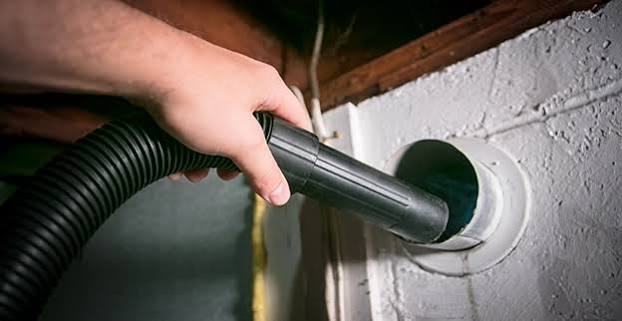
Where a professional earns their fee is the full vent run — long ducts, multiple bends, roof or wall terminations, and the exterior hood. Proper cleaning uses rotary brushes and high-powered vacuums that reach the entire length and actually remove the compacted lint rather than pushing it around. For a basement dryer with a long duct to the exterior, or any vent that hasn’t been done in years, this isn’t a shop-vac job.
This is also a service where the “cheap ad” caution from our duct cleaning price guide applies — hire on thoroughness and proper equipment, not the lowest sticker.
Getting your dryer vent cleaned in Orillia
Given the January fire peak, the smart time to have a dryer vent cleaned is before heating season, not after something goes wrong. If your clothes are taking two cycles to dry, your dryer runs hot, or you simply can’t remember the last time the vent was done, that’s your prompt.
Ducts on the Run provides professional dryer vent cleaning across Orillia and the surrounding area — clearing the full run from the machine to the exterior hood, and checking the vent and connections while we’re at it. It’s a small job that removes a genuine, well-documented fire risk. Of everything we do, it’s the one we’d least want you to put off.
Frequently asked questions
How often should a dryer vent be cleaned? Once a year for most homes, and more often for large households, homes with pets, long vent runs, or frequent drying of heavy items.
Isn’t cleaning the lint trap enough? No. The lint trap only catches part of the lint; the rest builds up in the vent duct behind and beyond the dryer, which is where dangerous clogs and most fires originate. Clean both.
What are the signs of a clogged dryer vent? Clothes taking longer to dry, the dryer or clothes running unusually hot, a burning smell, weak airflow from the exterior vent, and visible lint around the vent. Longer dry times are usually the first sign.
Can a dryer really start a house fire? Yes. Clogged dryer vents are a leading cause of preventable home fires, with lint buildup behind about a third of dryer fires in the most reliable national data. The good news is that it’s highly preventable with regular cleaning.
Why are dryer fires more common in winter? Dryers run more, and cold weather causes condensation and even ice in exhaust vents that restricts airflow. Fire data shows dryer fires peak in the fall and winter, with January the worst month.
Is dryer vent cleaning worth it, unlike routine duct cleaning? Yes — this is the distinction we draw. Routine duct cleaning is often optional; dryer vent cleaning addresses a documented fire hazard and is worth doing on schedule for nearly every household.
Sources: National Fire Protection Association, Home Fires Involving Clothes Dryers; U.S. Fire Administration (FEMA), Clothes Dryer Fires in Residential Buildings. Canadian municipal figures via Toronto Fire Services; hazard guidance via the Office of the Fire Marshal (Ontario).
Ducts on the Run provides professional dryer vent and duct cleaning across Orillia and the surrounding area. Book dryer vent cleaning here.