

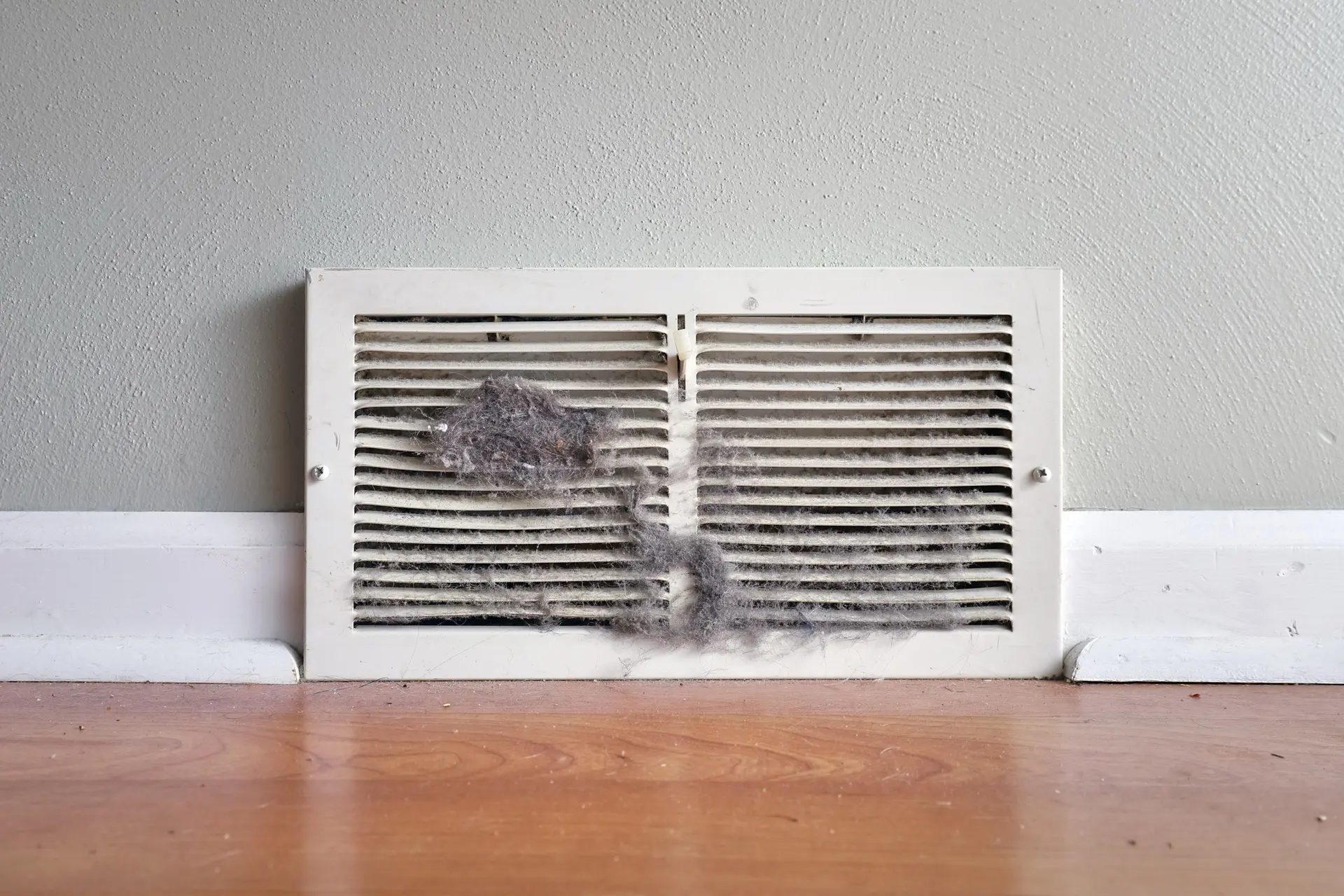
Honest answer: probably not as often as the ads suggest — but yes, in specific situations that are easy to identify. Duct cleaning is neither essential annual maintenance nor a scam. It’s a legitimate service that’s been badly oversold, which makes it genuinely hard to tell when you actually need it.
We clean ducts for a living, and we’d still rather you skip a cleaning you don’t need than pay for one you do. Here’s the straight version: what the evidence supports, what it doesn’t, and how to tell which side of the line your home is on.
The claims that don’t hold up
Three promises get made constantly in this industry. It’s worth knowing where each actually stands, because they’re the reason so many people either overpay or dismiss the whole thing.
“It will fix your allergies and improve your health.” This is the one to be most skeptical of. The U.S. Environmental Protection Agency’s position is blunt: duct cleaning has never been shown to prevent health problems, and it warns consumers directly about companies making sweeping health claims to close a sale. That said, plenty of people do notice a difference — but almost always because a cleaning removed something specific and heavy, like years of pet dander, renovation dust, or actual mould. Removing a real contaminant helps. “Cleaner ducts equal a healthier family” as a blanket promise does not.
“It will lower your energy bills.” Mostly marketing. The EPA notes there’s little evidence that cleaning the ducts themselves improves system efficiency. The nuance that’s actually true: cleaning dirty cooling coils, the blower fan, and heat exchangers can improve efficiency — but those are different components from the ductwork, and the gains are modest. Department of Energy research on coil cleaning found efficiency improvements in a range of roughly half a percent to eleven percent, and only when there was heavy buildup to begin with. If lower bills are your goal, changing your furnace filter on schedule does more, for far less money.
“Your ducts are full of dust that’s poisoning your air.” Overstated. Much of the debris inside ductwork sticks to the duct walls rather than blowing into your rooms — which is exactly why dirty ducts don’t automatically mean dirty indoor air. Your ducts are also just one of many particle sources in a home; cooking, cleaning, pets, and simply moving around usually contribute more.
If a company leads with any of these three as the reason you must book now, that’s your signal to slow down.
When duct cleaning is genuinely worth it
Now the other side, because “oversold” is not the same as “never worth it.” These are the situations where cleaning is a clear yes:
| Situation | Why it’s worth it |
|---|---|
| After a renovation or drywall work | Construction dust is fine and abundant; if ducts weren’t sealed off, they’re full of it |
| Visible mould in the ductwork or HVAC components | A real health concern — but fix the moisture source first, or it comes back |
| Rodent or insect infestation in the ducts | Droppings and nesting material are genuine contaminants |
| Moving into a home with unknown history | You don’t know what the previous owners did, or didn’t do |
| Heavy pet dander, especially with allergy sufferers in the home | Removing the actual source can produce a noticeable improvement |
| Dust visibly discharging from vents when the system runs | The EPA’s own “clean it” trigger — debris is actively entering your living space |
Notice the pattern: every genuine case involves a specific, identifiable problem — not a date on a calendar. That’s the whole test.
The single most common worthwhile trigger is renovation. Drywall sanding fills a duct system with fine dust that then circulates for years. If you’ve done work and the ducts weren’t covered, that one event justifies a cleaning more than half a decade of ordinary use would. We cover this in more detail in our guide to what duct cleaning costs in Ontario, since renovation jobs often need the furnace cleaned at the same time.
When you can skip it
Equally important, and rarely said out loud by companies selling the service:
You can reasonably pass on cleaning right now if you cleaned within the last three years or so, you change your furnace filter on schedule, you don’t have shedding pets, you haven’t renovated, and you’re not seeing dust from vents, smelling anything musty, or noticing airflow or allergy problems. In that case, a cleaning this year is unlikely to change anything you’d actually notice.
A better use of the same money: a better-quality furnace filter changed more often, plus a pre-heating-season furnace inspection — which the EPA recommends regardless, as a carbon monoxide safety measure for any home with a fuel-burning furnace, stove, or fireplace. If you want help deciding based on timing rather than symptoms, our guide on how often to clean air ducts in Ontario walks through the intervals.
The benefits that are actually defensible
To be fair to the service we provide, here’s what a proper cleaning genuinely does, without exaggeration:
- Removes a real contaminant when one exists — reno dust, mould, dander, pest debris. This is the core, honest value.
- Cleans the components that do affect efficiency — coils, blower, heat exchanger — when they’re dirty enough to matter.
- Supports system longevity and airflow by clearing restrictions, which can reduce strain on the equipment.
- Gives you a professional look inside your system, which often catches problems (moisture, leaks, filter issues) you’d otherwise miss.
What it does not do: cure allergies, meaningfully cut your energy bill on its own, or need to happen every year. A company honest about the first list won’t promise you the second.
How to make sure you’re paying for real work
If you decide it’s worth doing, the risk shifts from “do I need it” to “am I being ripped off.” The tells:
- Be wary of any advertised price under about $100. That’s bait; the real bill arrives through add-ons once the technician is inside. (More on this in our breakdown of how to spot a duct cleaning scam.)
- Insist on an inspection before a recommendation. A company that quotes a “you definitely need it” over the phone hasn’t looked at anything.
- Ask about equipment. Proper cleaning uses a truck-mounted or high-powered HEPA negative-air system, not a shop vac.
- For mould, ask about the moisture source. Cleaning mould without fixing what’s causing it just resets the clock.
- Reject “EPA-certified” claims. The EPA doesn’t certify, endorse, or approve any duct cleaning company. Anyone claiming otherwise is bluffing.
- Get it in writing — scope and total price, before the work starts.
What this means for Orillia homeowners
If you’re local and genuinely unsure whether your home needs cleaning, the right move isn’t to book blindly or to write it off — it’s to have someone look. Older homes near downtown, newer West Ridge builds still shedding construction dust, and seasonal properties around Lake Couchiching all sit in different places on the “worth it” spectrum.
Ducts on the Run will inspect your system, tell you honestly whether it needs the service, and give you the price up front. If your ducts are fine, we’ll say so — that’s the whole point of doing this the honest way.
Frequently asked questions
Is duct cleaning really necessary? Not as routine maintenance. It’s necessary when there’s a specific problem — renovation dust, visible mould, pests, or debris blowing from vents. Absent those, it’s optional and often skippable.
Is duct cleaning a scam? The service isn’t, but the marketing around it frequently is. The scam is in the pricing and pressure — sub-$100 ads, invented “mould,” and add-ons that triple the bill — not in the underlying work.
Will duct cleaning help my allergies? Sometimes, if it removes a real source like heavy pet dander or renovation dust. It’s not a cure, and the EPA hasn’t found evidence that duct cleaning prevents health problems. Treat it as one part of an indoor-air strategy.
Does duct cleaning save money on energy bills? Rarely in a meaningful way. Cleaning the ducts alone has little proven effect on efficiency. Regular filter changes do more for your bills.
How often is duct cleaning actually needed? For most homes, every three to five years as a check-in, and sooner only if a specific trigger appears. Annual cleaning isn’t supported by the EPA or the industry association.
What’s the one thing more worth my money than duct cleaning? A pre-season inspection of any fuel-burning furnace or fireplace, plus staying current on furnace filters. Both do more for safety and air quality than a routine duct cleaning.
Source: U.S. Environmental Protection Agency, Should You Have the Air Ducts in Your Home Cleaned?
Ducts on the Run provides residential and commercial duct cleaning across Orillia and the surrounding area. Book an honest assessment here.